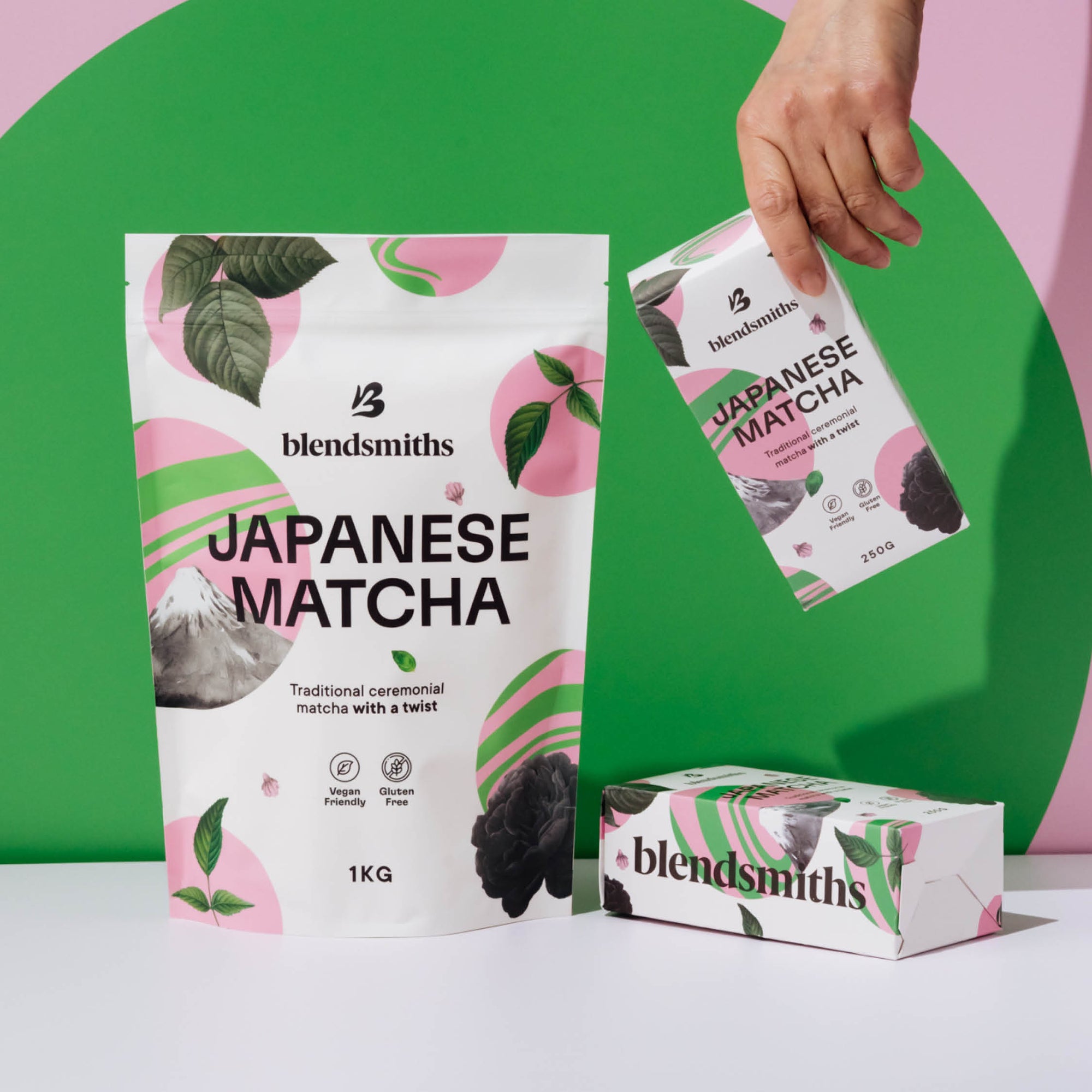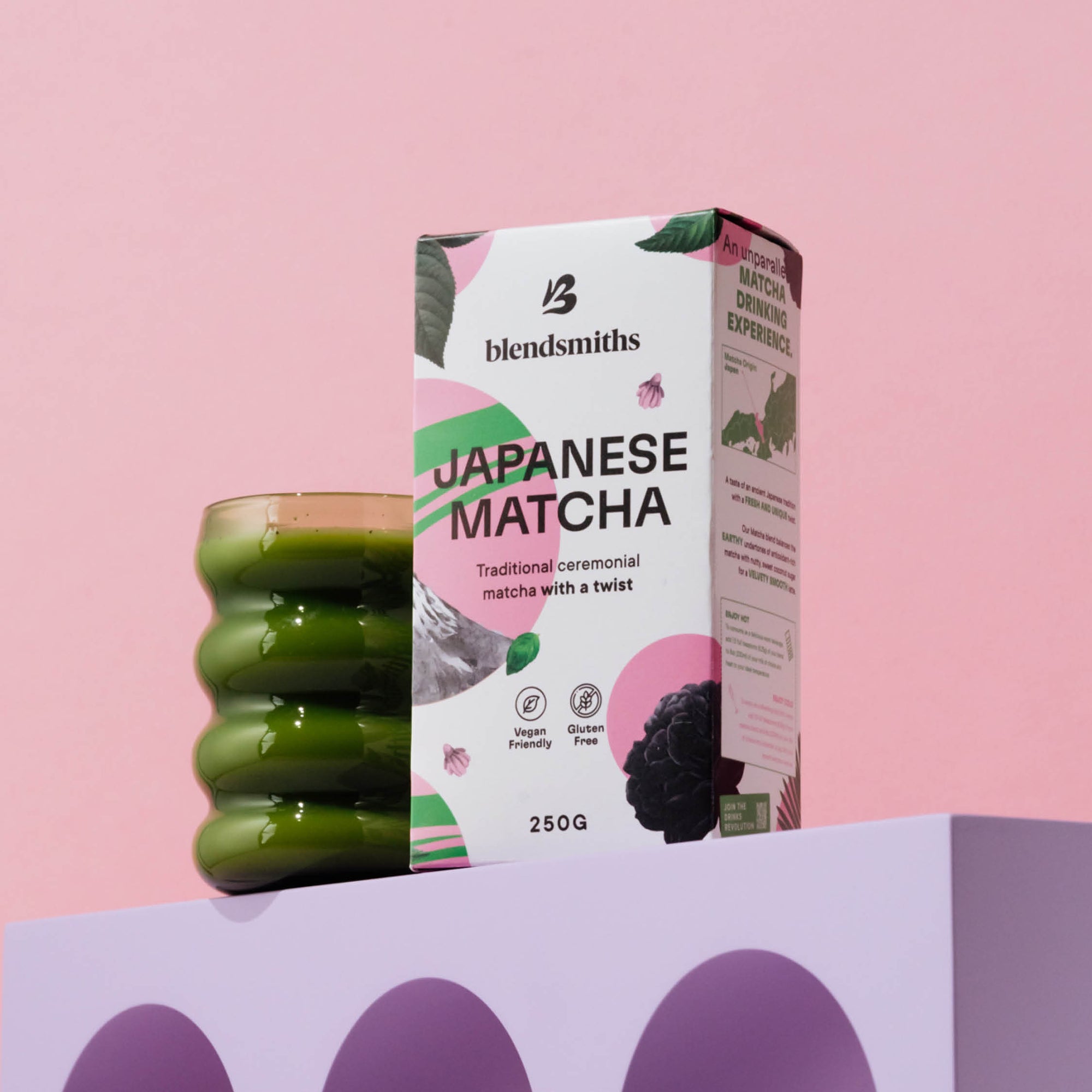
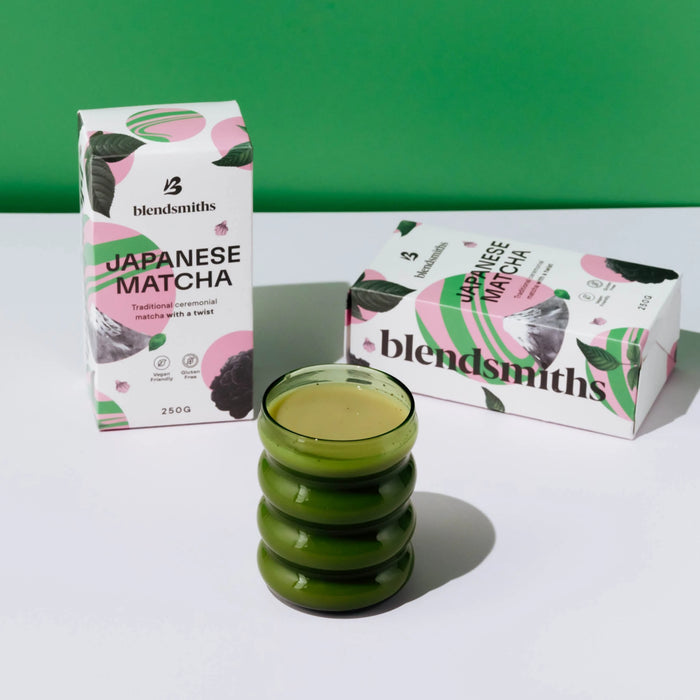


The Unexpected Story Behind Blendsmiths Matcha
Matcha is now one of the best-selling blends in the Blendsmiths range. But it wasn’t always a favourite around the kitchen table. We asked our founder to take us back to where it all began - from those early doubts to discovering what makes a truly great matcha.
Which Blendsmiths Blend Has the Most Unexpected Backstory?
Honestly? Matcha.
Today, it’s one of our best-selling products and one we’re unexpectedly proud of. But if you’d sat around our kitchen table during product development back in 2017, you probably wouldn’t have believed it would make it out of the testing phase.
In fact, there was a point when we weren’t even sure we liked it.
Before I explain why, a little context.
Although matcha is now synonymous with Japan, the story begins further back. The practice of grinding and whisking tea developed in China centuries ago, before powdered tea made its way to Japan, where Buddhist monks embraced it and, over time, it became deeply connected with Zen practice and the Japanese way of tea.
In Japan, matcha developed into a very specific way of growing and preparing tea. The tea plants are shaded for several weeks before harvesting, which helps produce the vibrant green colour and rich umami flavour that matcha is known for. The leaves are then steamed, dried and processed into tencha before being finely ground into the vivid green powder we know as matcha.
From Tradition to a New Generation of Matcha Drinkers
Fast forward to the mid-2010s and we were seeing another chapter in matcha’s story emerging.
Across Australia and parts of Asia, matcha was beginning to move beyond traditional preparation and into cafés: sweetened matcha lattes, iced matcha drinks, desserts and all sorts of creative recipes were introducing a completely new audience to it.
That caught my attention.
From day one, Blendsmiths has been built around three principles: exceptional flavour, uncompromising quality and doing right by Mother Nature.
But another part of our DNA has always been innovation.
We never wanted to create products simply because they already existed. We wanted to introduce people to flavours they hadn’t yet fallen in love with.
The conundrum?
We hadn’t fallen in love with matcha either. Not yet.
When Matcha Wasn't Winning Any Fans
During one particularly cold winter, both the Moore and Farnworth families became our unofficial product testing panel.
We'd sit around the "research and development table" — i.e. the same table where Mama Farnworth had just finished making sandwiches for everyone’s lunch.
Health & Safety would have had a field day.
The feedback went something like this:
"Well, it's no Yorkshire Tea, is it?"
"It tastes like pond water."
"I'm getting this... seaweedy taste in my mouth."
Matcha wasn't winning any early fans.
Looking back, though, those comments were exactly what we needed to hear.
Because the problem wasn’t necessarily matcha.
It was our understanding of matcha.
We weren't tasting particularly good matcha. We didn't understand how it should be prepared. We didn't appreciate how much acidic soil, mineral-dense soil or a couple more days of shade would influence the final cup.
And we had fallen into a trap that, as product developers, we're always trying to avoid: judging something before we'd really understood it.

Going Further Down the Rabbit Hole
So instead of deciding that matcha simply wasn't for us, we decided to go further down the rabbit hole.
We tasted as much of it as our stomachs would allow.
We immersed ourselves in its history and traditions. We learned how it is cultivated, how tencha becomes matcha, how it should be whisked and perhaps most importantly, why not all matcha tastes the same.
We also discovered something that is worth knowing if you're new to matcha: terms such as "ceremonial grade", "premium" and "culinary grade" aren't standardised industry grades. They can be useful shorthand, but there isn't a single regulated grading system behind them. Quality is much more nuanced, and factors such as cultivar, growing region, harvest, processing, colour, aroma, texture and flavour all matter.
That changed the way we looked at the product.
We realised that simply purchasing any old matcha and putting our name on it wasn't good enough. If we were going to introduce matcha to our customers, we needed to understand what we were buying, where it came from and what made one matcha genuinely enjoyable while another could taste, well...
Like pond water.
Sometimes You Must Look Beyond Your Own Preferences
And there was another lesson in there for us.
Sometimes you must look beyond your own preferences.
Just because something doesn't immediately resonate with you doesn't mean it isn't a brilliant product.
Sometimes it means you haven't understood it yet.
Personally, my time spent in Australia reinforced that belief.
Over more than a decade down under, I'd watched café culture evolve at an incredible pace. Australian cafés have a particular ability to take an ingredient, make it approachable and turn it into something people want to build a ritual around.
Matcha felt like one of those moments.
It was appearing more frequently on café menus, particularly as a latte and iced drink, and it was being embraced by consumers who wanted something different from their usual coffee order.
What we were seeing wasn't just a new flavour.
It felt like a new ritual emerging.
And I'd learned another thing over the years: trends in Australia can sometimes offer a glimpse of what might happen in the UK a little further down the track.
Launching Matcha
So, while we weren't yet completely sold on the flavour ourselves at first, we were increasingly convinced by the opportunity.
More importantly, we became convinced that we could create a matcha that we people would fall in love with.
So, we launched.
Not because we thought we knew everything about matcha.
Quite the opposite.
We launched because we were prepared to learn.
To understand the ingredient. To source it properly. To prepare it correctly. And to help our customers discover why this centuries-old tea had such a devoted following in the first place.
And sales were slow. Very slow.
But, looking back, that was hardly surprising. Matcha simply wasn’t on the radar of most Western consumers; let alone something you’d routinely find on a café menu.
And, if we’re being completely honest, we hadn’t got the blend right either. We were naïve, we were still learning, and our matcha quality simply wasn’t at the standard we expected from ourselves.
It took time, persistence and plenty of learning to get it right.
From Learning Curve to Best Seller
The matcha boom is now genuinely significant for the Japanese tea industry, not just a social-media fad. Japan's green-tea exports reached a record ¥84.7 billion in fiscal 2025, up 42% in volume, with powdered teas including matcha making up around 70% of export volume.
Nearly a decade later, it’s fair to say we’re very glad we backed the mighty green powder.
And the funny thing is, the story hasn't really ended there.
Matcha has gone from something we struggled to appreciate around a kitchen table to one of the biggest success stories in the Blendsmiths range.
And, in a strange way, that's probably exactly why we're so proud of it.
Because it reminds us that innovation isn't always about inventing something completely new.
Sometimes it's about looking at something that has been around for centuries, understanding it properly, respecting where it came from, and finding a new way for people to fall in love with it.
And if you'd told us in 2017 that matcha would one day become one of our best sellers?
I'm not sure we would have believed you.
We probably would have asked whether you'd accidentally been drinking the pond water.